

Skate Shoes NZ: Cupsole Or Vulc, And What Actually Lasts?
, by Michelle Griffin , 5 min reading time
, by Michelle Griffin , 5 min reading time

Two customers come in with the same budget most weeks. One buys a pair still going strong six months later. The other is back in a fortnight with a hole through the toe and a story about how the last board caught the sole wrong.
Most of that difference comes down to construction, not luck, and it is decided before you leave the shop. Cupsole or vulcanised, suede or canvas, reinforced toe or standard stitching. None of it is complicated once someone explains what each build does.
This is the first fork in the road and it shapes everything else about how a shoe rides and how long it survives.
A cupsole shoe has the sole moulded as one piece and glued or stitched to the upper in a single cup shape. That gives you a thicker, stiffer platform with more impact protection, which suits people doing a lot of stairs, rails or anything with real drop. The trade-off is less board feel, since there is more material between your foot and the deck, and a longer break-in period before the shoe softens up.
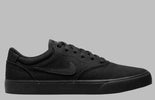
A vulcanised shoe uses a thinner sole bonded to the upper under heat, which keeps it flexible from the first wear and closer to the board. The Nike SB Chron 2 Canvas Shoe we stock uses this build, with a flexible canvas upper and a vulc sole bonded directly to the base. Vulc shoes tend to wear through faster at heavy-impact points because there is less material to begin with, but for street skating and flip tricks most people prefer the trade.
Neither build is better outright. Cupsole for durability if you are dropping in a lot, vulc for feel if you are mostly flatground and technical.
Almost every skate shoe dies in the same spot: the ollie patch, on the medial side near the big toe, where the board grip and your foot meet on every pop.
Suede holds up far better here than canvas. It resists abrasion instead of absorbing it, so a suede upper can go a full season past a canvas one skated the same amount. Canvas is lighter and breathes better in summer, a fair trade for some people, but if you skate hard and often, suede saves you money over a year rather than costing more up front.
Reinforced toe caps and double stitching around that same zone add real life to a shoe as well. It is worth checking that detail before buying rather than assuming every pair in a range is built the same, because plenty of ranges use a lighter build on the cheaper colourways.
The second most common failure point is the tongue and laces, usually from a foot landing wrong or laces catching under a truck.
A gusseted tongue is stitched into the sides rather than sitting loose, which stops it sliding and keeps debris out. Lace protection, a flap or moulded panel over the eyelets, stops laces fraying and snapping mid session. Neither shows up in a product photo, so it is worth reading the description or asking before you buy if durability matters to you.
The chunkier nineties-style shoe has come back hard, and it is not purely a look. A shoe like the Osiris D3 range carries a taller sole and more cushioning through the heel, which genuinely takes more impact on bigger drops. A slimmer shoe gives you more direct board feel and usually weighs less, which some skaters prefer for technical tricks where feedback is the priority over cushioning.
Pick based on what you are skating rather than what looks best in photos. Stairs and rails favour the chunkier build. Ledges and flatground favour the slimmer one.
If you are jumping down anything with height, the insole matters as much as the outsole. Look for a proper footbed with genuine cushioning rather than a flat liner, since that protects your heels and joints over a long session. A shoe can have the right upper construction and still leave your feet aching if the insole is an afterthought.
Skate shoes generally run differently to running shoes, and most people size down half a size from what they would wear in a regular trainer. A snug fit gives better board feel and control. A shoe with extra room inside moves around during landings and wears unevenly as a result. If you are between sizes, going down is usually the safer call for anyone skating regularly rather than wearing the shoe casually.
Nike SB sits closest to an everyday sneaker, which is why it works as well off the board as on it. We went deeper on one standout pair from that range in our Nike SB Force 58 Premium review, which covers that cupsole build in full.
Osiris carries the chunky look through and through, built around genuine impact protection rather than just the silhouette. Globe sits in the middle, with a range across cupsole and vulc builds depending on the model, and tends to be the value pick for someone skating a few times a week without spending at the top end. All three, along with the rest of our skate shoes, come from brands built specifically for skating rather than a lifestyle shoe adapted after the fact.
Once your board setup is sorted through our skate hardware range, the shoe is the last piece worth getting right rather than grabbing whatever looks good on the wall. Think about where you skate, how often, and whether feel or durability matters most, and the right build gets a lot easier to pick.